Did you know most of your B2B buyers drop off before you even get a chance to talk to them?
A great product or service isn’t enough anymore.
To stand out, you need to deliver excellent experiences at every touchpoint.
With customer journey mapping and tools like HubSpot, you can design experiences that:
- Understand your customers better
- Deliver better buyer experiences
- Achieve more effective marketing
- Get higher conversions and more leads
This guide will show you how.
Let’s dive into mapping and implementing your customer journey using HubSpot.
1. What is a Customer Journey Map?
Traditional sales funnels often fall short.
They focus on immediate conversions rather than building long-term relationships.
Most companies apply oversimplified consumer sales tactics to complex B2B purchases, which rarely works. Why?
B2B sales have higher stakes, longer cycles, and multiple decision-makers.
Have you considered what your customers experience from when they first hear about your business to when they become your most loyal advocates?
This journey encompasses every interaction they have with your company.
This is your customer journey.
It’s the complete experience your customer has across all channels and touchpoints.
Mapping this journey is crucial to understanding every step they take and identifying where you can make the most significant impact.
So, what is a customer journey map?
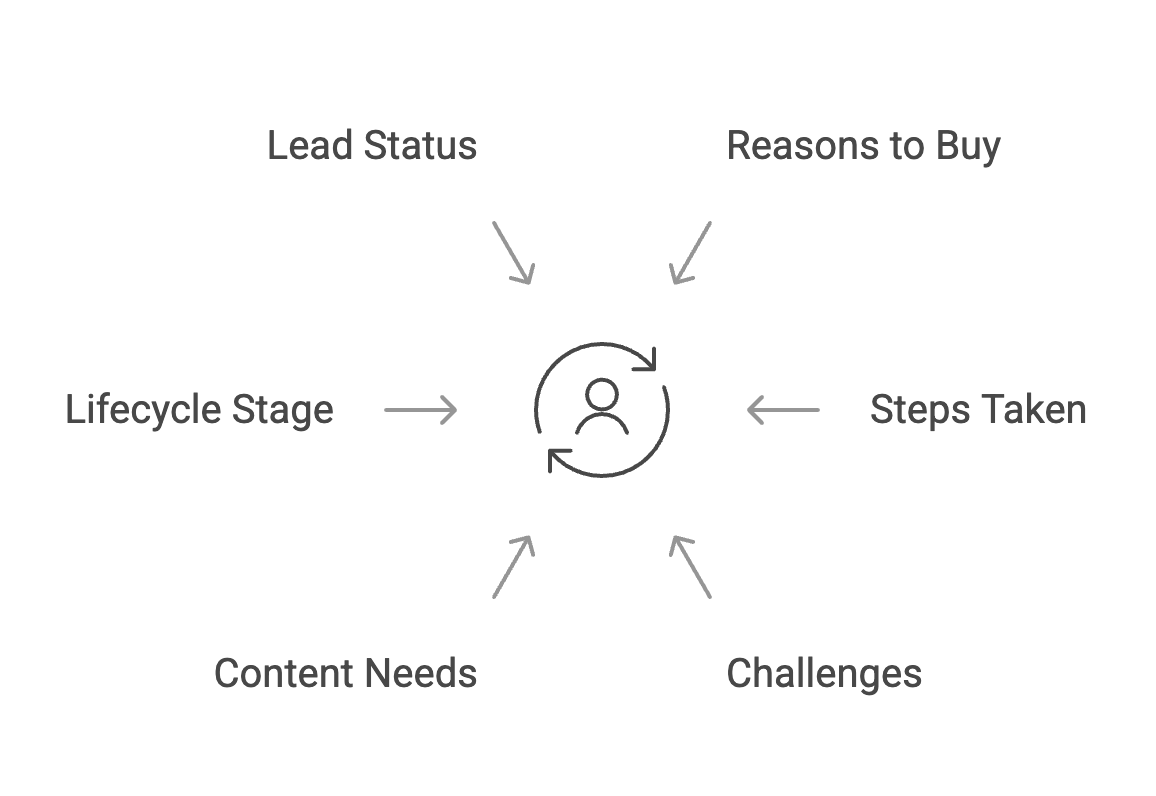
It’s a detailed roadmap of your customer’s experience, from discovering your brand to becoming loyal. It captures:
- Reasons to buy
- Steps they take
- Challenges
- Content Needs
- Lifecycle Stage
- Lead Status
Mapping this gives you a priceless perspective—seeing your business through your customers' eyes. This empowers smarter decisions to improve their experience and their results.
Let's explore the key benefits of mapping your customer journey:
1. Shift Your Focus to Attracting Customers
Are you tired of cold calls and sending emails that don't get results?
Instead, focus on attracting more qualified prospects.
Use your customer journey map to identify buyers' questions at each stage and create content that addresses their needs.
Develop informative blog posts, helpful guides, targeted advertising, and engaging social media content that naturally draws buyers in based on the topics they care about.
Focusing on marketing will attract inbound leads familiar with your products and more likely to convert into paying customers.
2. Define Your Ideal Customers (ICP)
Understanding your target audience is the foundation of effective customer journey mapping.
Create Ideal Customer Profiles (ICPs) using accurate data and qualitative insights to tailor your strategies to meet their needs and priorities.
Different customer groups have unique motivations and respond to tailored messaging.
For example, shipyards focus on solutions that enhance operational efficiency and reduce costs, while vessel owners prioritize cutting-edge technology for regulatory compliance or fuel savings.
By addressing the specific needs of each segment, you ensure your messaging resonates, driving engagement and conversions.
The better you know your customers, the more effectively you can guide them through their journey.
3. Stay One Step Ahead with Proactive Support
Wouldn't it be great to solve customer issues before they even arise?
By mapping the customer journey, you can anticipate needs and provide proactive service that exceeds expectations.
Use your journey map to spot where customers might face difficulties.
Set up automated emails or messages to guide them through these tricky parts.
To keep customers engaged and satisfied, offer live chat support, follow up with timely emails, and maintain a comprehensive knowledge base.
Being proactive not only enhances the customer experience but also builds lasting loyalty.
By addressing issues before they become problems, you position your business as attentive and customer-focused.
4. Improve Customer Retention
Customer journey mapping helps you proactively keep customers satisfied and loyal.
Use your map to identify points of frustration or where customers may lose interest.
Then, enhance their experience by improving workflows, simplifying steps, or adding support at key friction points to reduce churn and build loyalty after they have purchased.
5. Unite Your Team Around the Customer
A well-mapped customer journey fosters a customer-centric culture that unites your team.
Share the journey map with all departments so everyone understands each touchpoint.
Encourage Marketing, Sales, and Customer Service to collaborate closely, ensuring all teams have access to the same customer information with tools like HubSpot for seamless communication.
Aligning your team around the customer will deliver a consistent, exceptional experience.
When everyone is on the same page, customers feel valued and are more likely to stay loyal.
2. How to Gather Insights About the Customer Journey
Mapping your customer journey from start to finish is like creating a detailed roadmap of critical touchpoints they encounter with your company.
This process helps you spot opportunities to enhance the buying experience, address pain points, create more relevant content, and build stronger relationships.
No two customer journeys are the same, and they’re rarely linear.
Your buyers might revisit earlier stages, skip steps entirely, or engage with different channels unpredictably.
They might read a blog post today, attend a webinar next week, and download a whitepaper a month later.
This unpredictability doesn’t make customer journey mapping any less valuable—it makes it essential.
A well-crafted journey map acts like a guide, providing structure and creating guardrails to keep your customers on the right path, even when their journey takes unexpected turns.
So, how do you create a map that balances structure with flexibility?
It all starts with understanding your customer’s behavior and needs.
Here are some practical ways to gather insights directly from them:
1. Listen to Sales Calls:
Your sales team talks to prospects every day.
They're on the front lines, hearing firsthand about your potential customers' challenges and needs.
Encourage your sales reps to take detailed notes and share common themes they encounter.
2. Analyze Form Submissions:
When visitors fill out forms on your website, they often provide valuable information.
Include open-ended questions like "What challenges are you currently facing?" or "What prompted your interest in our solution?".
3. Conduct Customer Interviews:
Customer interviews are a powerful tool for gaining qualitative insights into your target audience's motivations, challenges, and decision-making processes.
By speaking directly with current customers and prospects, you can uncover the underlying factors driving their behavior and identify unmet needs. Here’s how to approach it effectively:
4. Review Closed Deals:
Look at your past closed deals—the ones you won and lost.
What common factors led to success for the deals you won?
For those you lost, where did prospects drop off, and why? This analysis can help you identify strengths to build upon and weaknesses to address.
3. How to Map Your Customer Journey from Start to Finish
1. Expand on Each Journey Stage with Specific Objectives
Awareness marks when a customer becomes aware of a problem they are experiencing.
This leads to the Consideration stage, where they begin researching potential solutions.
During the Decision stage, customers evaluate their options and decide on a vendor.
The Retention stage focuses on providing post-purchase support and onboarding.
Finally, the Loyalty stage involves ongoing engagement that turns customers into advocates.
Understanding these key stages helps you effectively map and address your customers' needs at every point in their journey.
2. Map Learnings and Information Needs
Understanding what your customers need at each stage and delivering it through the proper channels is key to effectively guiding them.
Awareness Stage
Customers seek insights into their problems or needs. Provide educational content like blog articles, infographics, and industry reports shared via search engines and social media.
Consideration Stage
At this stage, buyers explore solutions and comparisons. Offer in-depth webinars, events, and comparison charts on your website to position your offering as a potential solution.
Decision Stage
Customers need detailed pricing, ROI insights, and implementation details. Provide demos, case studies, and tailored proposals during sales consultations.
Retention Stage
Provide post-purchase support through onboarding guides, tutorials, and responsive support. Use newsletters, customer portals, and knowledge bases, and regularly survey customers for feedback.
Loyalty Stage
Provide exclusive industry insights, premium content, and thought leadership to demonstrate your expertise and value and build long-term partnerships.
Offering unique resources strengthens your position as a trusted partner and deepens your customer relationships.
Consider initiatives like account reviews or co-branded case studies to showcase your solutions' success while highlighting their impact.
Innovation programs or advanced training can further align your offerings with their evolving needs, adding measurable value to their operations.
3. List Potential Obstacles and Pain Points
At each customer journey stage, obstacles can prevent customers from progressing.
In the awareness stage, customers may need more information or to see your brand more clearly.
During Consideration, the abundance of options and unclear differentiation can overwhelm them.
In the Decision stage, budget constraints or stakeholder objections may halt progress.
For Retention, a good user experience or adequate support can lead to satisfaction.
Finally, in the Loyalty stage, customers may disengage due to better offers from competitors or a lack of ongoing connection with your company.
By systematically addressing these obstacles, you can build trust and guide customers seamlessly through their customer journey.
4. Recognize and Address Objections
Customers often have questions or concerns during their journey.
Common worries include:- Price: "Is this worth the cost?"
- Product Fit: "Will this work for me?"
- Implementation: "Will it be hard to set up?"
You can ease these concerns by sharing helpful information.
Use FAQs across your website to answer common questions, case studies to show real success stories, and testimonials to prove others trust your product.
An ROI calculator can help show how your solution saves money or adds value.
Make sure your sales and support teams have these tools. This will allow them to answer questions clearly and help customers feel confident in their decisions.
5. Include Other Stakeholders
In complex B2B sales, many people participate in the decision-making process.
Influencers, like IT staff or department heads, often ask, "How will this affect my work?" They want to understand how your solution will improve workflows or operations.
On the other hand, blockers, such as budget controllers, may ask, "Is this expense justified?" They must see the financial value and return on investment (ROI).
To address these concerns, provide information tailored to each stakeholder’s priorities.
For influencers, highlight operational benefits and workflow improvements. For blockers, focus on financial advantages and cost-effectiveness.
If necessary, hold meetings or create materials specifically designed for each role. This will ensure all stakeholders feel informed, valued, and confident in their decisions.
6. Utilize Lifecycle Stages and Lead Status in HubSpot
Understanding lifecycle stages and lead status is essential for managing contacts in B2B.
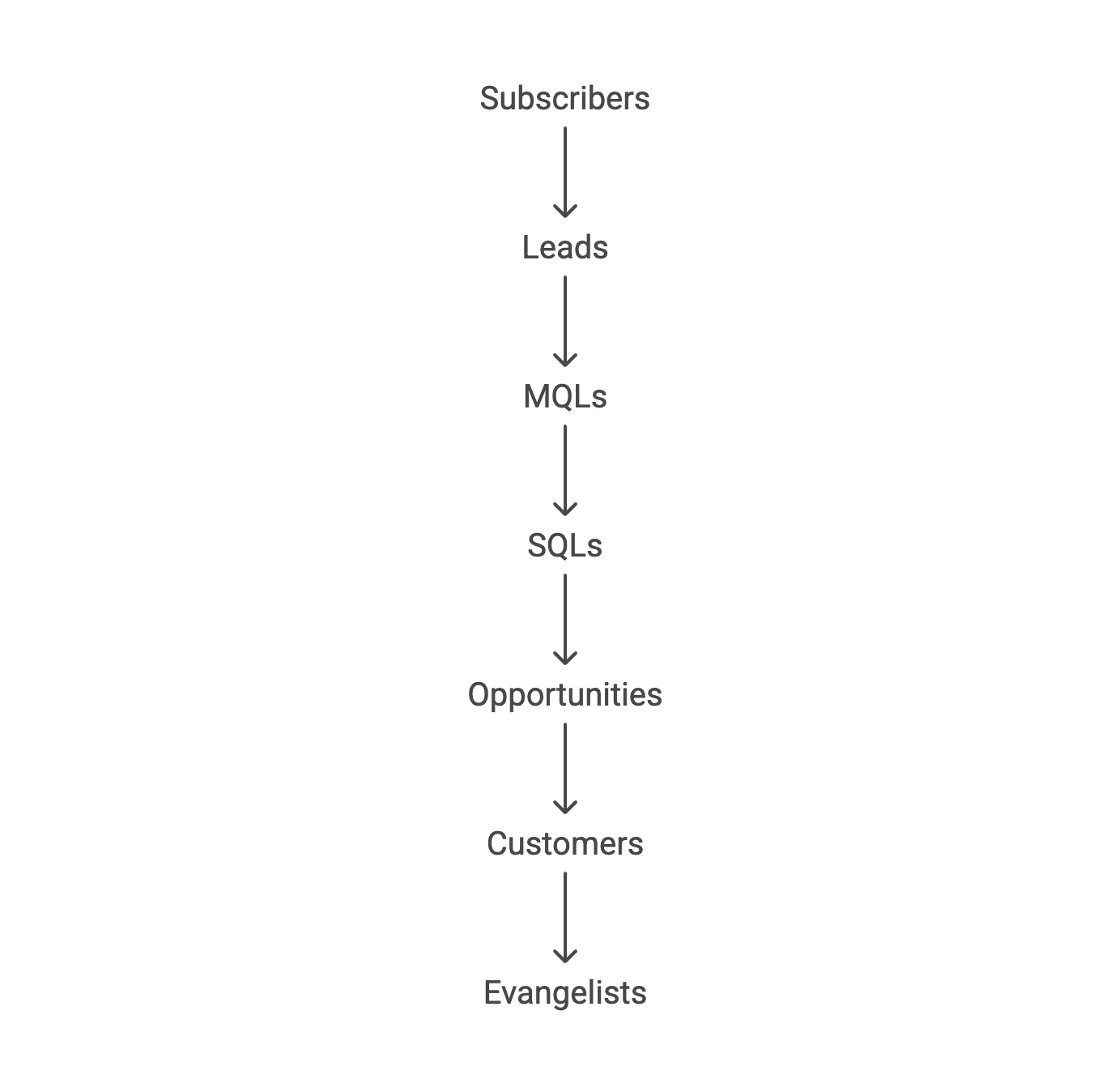
Lifecycle stages and lead status help you understand where each contact is in their journey and how to engage them effectively:
- Subscribers: Engage with your content but aren’t yet leads.
- Leads: Express interest in your offering.
- MQLs: Fit your ICP and show higher engagement.
- SQLs: Ready for sales interaction.
- Opportunities: SQLs in active negotiation.
- Customers: Have completed a purchase.
- Evangelists: Loyal advocates for your company.
Lead status adds another layer of precision, primarily helping to identify how a Sales-Qualified Lead (SQL) is progressing toward buying:
- Open: Contacts without any activity or owner.
- In Progress: Currently engaged in conversations.
- Open Deal: In active negotiations.
- Unqualified: Not a good fit for your business.
- Closed Won: A deal that is closed won.
- Closed Lost: A deal that is closed lost.
This segmentation helps your sales and marketing teams align their efforts, ensuring no leads are overlooked and that resources are focused on the most promising opportunities.
7. Define Clear Calls-to-Action (CTAs) for Each Stage
Crafting compelling calls-to-action (CTAs) requires aligning them with your customers' readiness to act at each stage of their journey.
In the Awareness stage, CTAs like "Register for our newsletter" provide value while introducing prospects to your brand.
During Consideration, encourage engagement with offers such as "Sign up for our upcoming webinar" to showcase your expertise.
For the Decision stage, actionable CTAs like "Request a personalized demo" or "Request Pricing" help move prospects closer to becoming customers.
In the Retention stage, foster ongoing engagement with options like "Access our Onboarding Portal," "Explore Our Knowledge Base," or "Register for Advanced Training."
In the Loyalty stage, leverage advocacy with CTAs such as "Refer a colleague," "Become a Featured Case Study," or "Attend Our Exclusive Industry Roundtable."
Use HubSpot's Smart Content and Progressive Profiling to adapt CTAs dynamically based on a contact's lifecycle stage and the lists they are in.
This personalization ensures your CTAs remain relevant and compelling, increasing engagement and driving action at the right time.
8. Set Specific Metrics to Track Success
Tracking metrics at each customer journey stage ensures your strategies drive results.
Awareness Stage
Focus: Attracting visibility, generating interest, and reaching target accounts.
- Website Traffic: Tracks website traffic from organic, social, paid ads, and email.
- Number of Target Accounts: Tracks the quantity of accounts in your target market.
- Campaign Performance: Tracks traffic, leads, and engagement from HubSpot campaigns.
- Cost Per Lead (CPL): Assesses the cost-effectiveness of lead generation campaigns.
- Conversion Rate (Visitor to Lead): Evaluate how effectively visits convert to contacts.
Consideration Stage
Focus: Engaging and nurturing potential buyers, moving them into the pipeline.
- Marketing Qualified Leads (MQLs): Tracks leads that meet the criteria for sales engagement.
- Pipeline Contribution: Measures the percentage of sales pipeline influenced by marketing efforts.
- Conversion Rate (Lead to MQL): Monitors the success of nurturing activities.
- Deal Pipeline: Tracks the cumulative value of active opportunities in the pipeline.
- Number of Opportunities: Measures how many qualified leads progress into opportunities.
- Sales Cycle Length: Monitors how quickly engaged accounts move through the sales process.
- Meetings Booked: Tracks key engagement milestones like scheduled sales meetings.
Decision Stage
Focus: Converting leads into paying customers and maximizing deal success.
- Customer Acquisition Cost (CAC): Calculates the total customer acquisition cost.
- Return on Marketing Investment (ROMI): Revenue generated relative to marketing spend.
- Conversion Rate (SQL to Customer): Measures the effectiveness of converting qualified leads into customers.
- Average Deal Size: Highlights the value of deals compared to other strategies.
- Deal Conversion Rate (Win Rate): Tracks the closed-won to closed-lost deals ratio.
- Deal Pipeline: Monitors the value of deals in active negotiation to project revenue.
Retention Stage
Focus: Building long-term relationships, driving lifecycle value, and generating advocacy.
- Customer Satisfaction and Retention: Tracks Customer Satisfaction (CSAT), Net Promoter Score (NPS), retention rates, and overall satisfaction.
- Support Ticket Resolution Time: Monitors the speed and efficiency of resolving customer issues.
- Product Usage Rate: Tracks how actively customers use your solution, helping identify engagement trends.
- Onboarding Completion Rate: Measures how many customers complete the onboarding process, a critical factor in retention.
Loyalty Stage
- Customer Lifetime Value (CLV): Measures the long-term revenue generated from target accounts.
- Upsells: Monitors additional revenue from existing customers.
- Referrals: Tracks new customers brought in by existing accounts, demonstrating advocacy.
Review these metrics regularly in HubSpot to identify trends, assess performance, and make data-driven adjustments that optimize the customer experience and drive business growth.
9. Identify the Channels Your Prospects Use
To connect effectively with potential customers, you need to know where they spend their time searching for solutions.
By understanding their preferred information sources, you can tailor your outreach to meet them where they are. Common channels include:
- Websites and Blogs: Industry-specific sites, competitor websites, and influential blogs.
- Thought Leaders and Influencers: Experts in your field with a strong following.
- Online Communities and Forums: Platforms like LinkedIn Groups, Reddit, Quora, and niche forums.
- Social Media Platforms: LinkedIn, Twitter, and even Facebook for professional discussions.
- Podcasts and Webinars: Popular for in-depth industry insights and updates.
10. Developing a Content Strategy That Resonates with Your Prospects
Engage prospects effectively by addressing their questions and challenges at every journey stage.
To effectively engage your prospects, you need a content strategy that addresses their questions and challenges at each stage of their buyer’s journey.
Start by leveraging insights from customer questions and sales FAQs to understand your prospects' pain points.
You can identify their search terms using keyword research tools like Google Search Console and HubSpot’s SEO tools.
Structure your content with topic clusters and pillar pages, organizing resources around core themes to provide comprehensive answers.
Stay current by monitoring industry trends through events, webinars, and forums, ensuring your content remains relevant and insightful.
Before creating new content, conduct a content audit to assess what you already have.
Inventory your existing assets, analyze performance metrics, and identify gaps or redundancies. Ensure your content aligns with your buyer personas, addressing their unique needs and goals.
While top-of-the-funnel content, such as blogs and guides, attracts a broad audience, prioritize creating bottom-of-the-funnel content that drives conversions.
Develop case studies to showcase success stories, offer product demos or trials for hands-on engagement, and make comparison guides to help prospects evaluate options and see why your solution is the best fit.
Use these insights to build a content calendar that balances educational resources for early-stage prospects, solution-focused content for mid-stage engagement, and conversion-driven assets for decision-makers.
You'll position your brand as a trusted resource and drive meaningful engagement by aligning your content with the buyer’s journey and delivering it through their preferred channels.
Now It’s Your Turn to Map Your Customer Journey
You’ve seen how mapping your customer journey can transform how you connect with your audience. Now, it’s time to put these ideas into action.
What step will you take first?
- Will you dive into HubSpot’s tools to start mapping today?
- Or involve your team to brainstorm insights from every corner of your organization.
- Maybe you’ll start small by exploring templates and guides to build momentum.
Whatever you choose, remember: when you understand and address your customers' needs at every stage, you’re not just meeting expectations—you’re creating loyal advocates.