What if you could stop chasing endless leads and instead focus on the accounts that truly move the needle for your business?
Account-based marketing (ABM) makes this possible, giving you a clear strategy to target the B2B SaaS-buying companies that need your product most.
Imagine this:
Your sales and marketing teams are working together, delivering personalized messages that address the unique challenges of RevOps leaders, VPs of Sales, and the IT and security teams who sign off on new software.
Instead of generic pitches, you're crafting highly relevant content that resonates—emails that grab attention, webinars tailored to real problems, and one-on-one demos that drive revenue.
ABM is about generating meetings, pipeline, and revenue from the most valuable accounts in your market while wasting less of your marketing budget.
You'll engage key decision-makers, build trust, and shorten those notoriously long sales cycles.
Whether you want to expand your reach or upsell existing customers, Account-Based Marketing (ABM) can transform how you win and retain customers as a B2B SaaS company.
Curious? Let's explore how you can start building your ABM strategy today.
What Is Account-Based Marketing?
Account-Based Marketing (ABM) is all about precision.
Instead of spreading your efforts to generate a high volume of leads, you focus your sales and marketing energy on the companies (accounts) that can significantly impact your business.
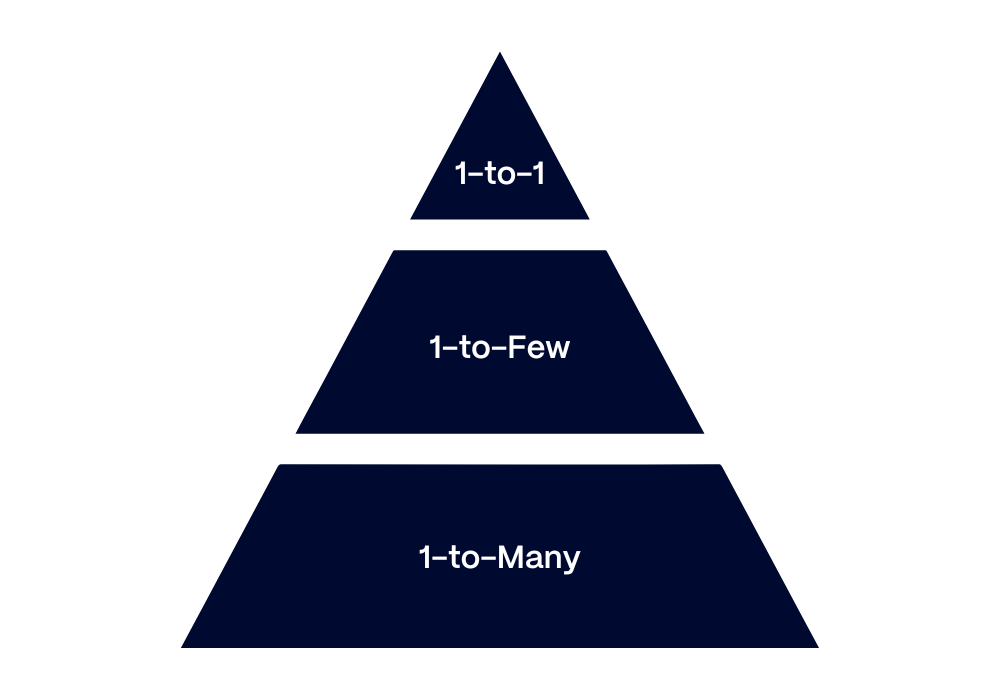
Think of it as putting all your resources into targeting accounts that genuinely matter rather than casting a wide, ineffective net.
Here's how it works:
First, you identify your best customers.
Next, you find high-value accounts—the companies most likely to benefit from your product—similar to your best customers.
Then, you tailor every part of your outreach and marketing campaigns to address their needs, challenges, and goals.
This is not just a marketing tactic. It's a coordinated effort in which sales, marketing, and customer success teams work together to deliver personalized, unified messaging.
Why should you care? In B2B SaaS, selling is no easy task.
Sales cycles are long, there are many stakeholders, and the buying process is complex.
Adopting ABM lets you focus your resources on the accounts most likely to convert into long-term, profitable customers.
No more one-size-fits-all cold email blasts or disconnected sales efforts.
Instead, you craft campaigns that address each account's unique challenges, such as tool sprawl, manual work, or security and compliance requirements.
The pillars of ABM that drive this success include:
1. Targeted Strategy: Focus on high-value companies that align with your Ideal Customer Profile (ICP). For instance, are they running teams where your software can deliver measurable efficiency gains?
2. Personalized Campaigns: Tailor your messaging to resonate with specific challenges, such as cutting tool spend or hitting security and compliance requirements.
3. Sales–Marketing Alignment: Keep your teams in sync so you can respond immediately when a prospect shows interest, such as signing up for a webinar or downloading a whitepaper.
4. Customer Expansion: Treat existing large accounts like individual markets, crafting new campaigns to grow your footprint within those organizations.
ABM changes the way you think about leads.
Instead of chasing many, you build deeper, more meaningful relationships with a few.
That's how you close deals faster, create lasting partnerships, and stand out in a competitive B2B SaaS market.
Why ABM Is Perfect for B2B SaaS
If you sell B2B SaaS, you already know how tough it can be to close deals.
Long sales cycles, security reviews, and multiple decision-makers often make the process feel like a marathon.
So, how do you cut through the noise and get everyone on board?
That's where Account-Based Marketing (ABM) comes in.
Think about all the people you need to convince to buy your solution:
For example, finance cares about cost and ROI, the end-users want a tool their team will actually adopt, IT is focused on integrations and security, and procurement is laser-focused on contract terms.
ABM helps you craft personalized messages for each group (the buying committee), making it easier to get everyone on the same page and win buy-in for a new solution.
There are several reasons Account-Based Marketing is ideal for B2B SaaS companies:
1. Tackling Long Sales Cycles
Enterprise SaaS deals don't happen overnight. Months—or even quarters—can pass as prospects evaluate vendors, weigh risks, and navigate internal reviews.
ABM keeps you in the game with consistent, relevant touchpoints.
For example, instead of sending a generic email, you might share a case study showing how your platform helped a similar team cut onboarding time by 40%.
2. Using Data to Target the Right Accounts
With ABM, your strategy thrives on precision.
By leveraging data—like company size, funding stage, or the tools already in their stack—you can zero in on companies that fit your Ideal Customer Profile (ICP).
This ensures your time and resources go into accounts with the highest potential for conversion.
ABM lets you focus on fewer accounts while getting better results.
3. Expanding Your Footprint with Existing Customers
ABM isn't just for new business. If a company already uses your platform for one team, why not introduce them to an adjacent team or a higher tier?
Or, if you've landed the European division, you could expand the relationship into the North American or APAC business unit.
Accounts can become a market of one, especially for larger companies. Instead of constantly winning new business, expand your relationship with the customers you already have.
4. Winning Over Multiple Stakeholders
In B2B SaaS, a single sale can involve multiple teams, each with its own priorities.
ABM lets you tailor content for each stakeholder.
For instance, show IT how your platform integrates seamlessly while giving security and legal the compliance data that reduces their risk. This approach builds consensus and moves deals forward.
ABM aligns perfectly with the challenges of B2B SaaS.
By focusing on the right accounts, creating tailored content, and engaging each stakeholder, you'll stand out in a crowded market and stay top-of-mind throughout the buying journey.
How to Implement Account-Based Marketing: Key Tactics for Success
In B2B SaaS, your prospects are often complex organizations with unique needs, such as consolidating their tool stack, automating manual work, or improving retention.
To win these high-value accounts, you need a clear ABM plan. Here's how to start:
1. Select the Right Accounts
Not every company will be a fit for your product, so start by narrowing your focus. Look for accounts that align with your Ideal Customer Profile (ICP). Ask yourself:
\n- \n
- Do they have the use case and the pain your product solves? \n
- Are they large enough to afford your solution? \n
- Are they already adopting tools that complement your platform? \n
Use tools like LinkedIn Sales Navigator, Clay or Apollo, plus intent data, to identify companies hiring for relevant roles, raising funding, or launching new initiatives.
Collaborate with your sales and marketing teams to confirm these accounts meet your criteria.
Once an account is marked “high potential,” keep monitoring for changes—like a leadership shift or a new funding round—that could make them even more relevant.
2. Identify the Buying Committee
In large organizations, decisions aren't made by one person.
The buying committee—a group of key stakeholders—ensures major purchases align with the company's needs, budget, and goals.
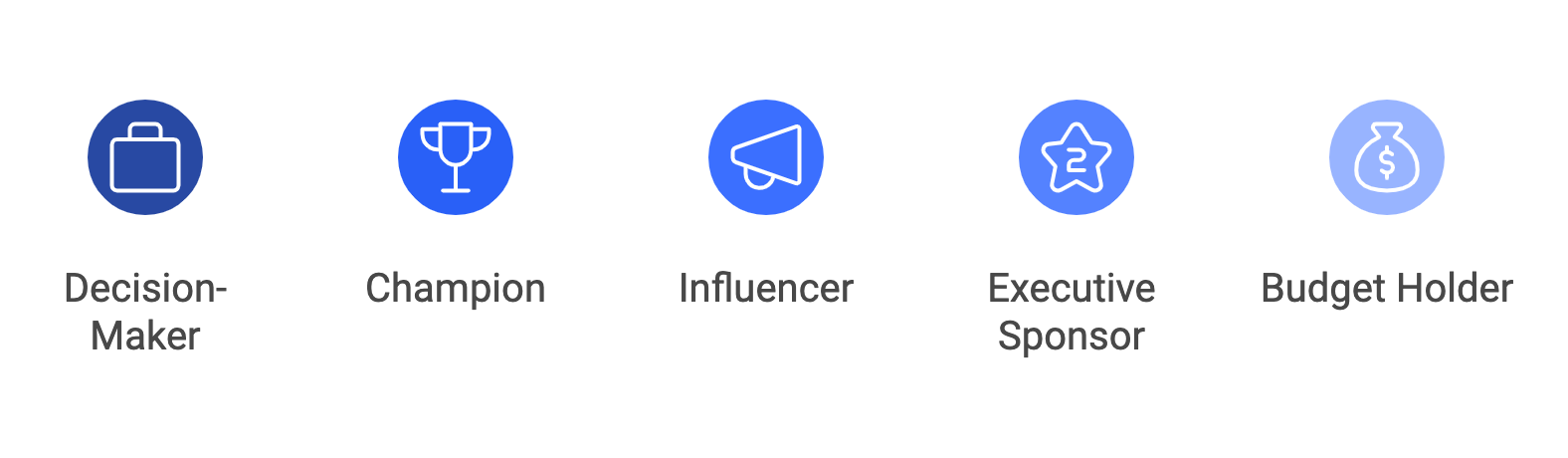
To sell effectively, you need to understand this group and their roles:
Decision-Maker: The final authority on the purchase.
Champion: Advocates for your product inside the company (often a key persona).
Influencer: Shapes the buying decision through expertise or opinion.
End-User: The person who will use the product daily.
Budget Holder: Controls the funds for the purchase.
Executive Sponsor: Ensures the solution aligns with strategic goals.
Legal and Security: Evaluates contractual, privacy, and security risk.
Blocker: Someone who may resist or challenge the decision.
Mapping out the buying committee helps you tailor your messaging to each role's priorities and concerns, ensuring a comprehensive approach to winning the account.
3. Craft Personalized Messaging
Once you've identified target accounts and the people inside them, speak directly to their pain points through your content and outreach.
Did a prospect just raise a round and need to scale fast? Show them how your platform supports that growth without adding headcount.
Are they expanding into a new market? Highlight how your platform shortens ramp time and standardizes the playbook across teams.
Take it a step further with account-specific campaigns. For instance, create a series of emails that lead to an exclusive webinar focused on their top challenges.
Then follow up with a tailored demo showing how your solution directly solves those issues.
When your messaging is this personal, it shows you understand their business—and builds trust faster.
4. Align Your Sales and Marketing Teams
For ABM to work, your sales and marketing teams must act as one.
Let's say a prospect reads your whitepaper and signs up for a webinar.
If sales don't know this, they'll miss the chance to follow up while interest is high.
To avoid this, set up regular check-ins so both teams can share insights and track account activity.
Use a CRM like HubSpot to keep everyone on the same page and ensure sales know when marketing efforts—like an email campaign or a webinar—have caught a prospect's attention.
This collaboration makes prospects feel like you truly understand their needs, creating a better experience from start to finish.
Challenges of ABM in B2B SaaS—and How to Overcome Them
Even with the best intentions, rolling out an ABM strategy as a B2B SaaS team comes with hurdles. From resource demands to data management, here's what you might face and how to handle it:
1. ABM Is Resource-Intensive
Creating highly personalized messaging and campaigns takes time and money.
You're not just sending generic emails; you're crafting tailored content, hosting exclusive webinars, and arranging bespoke demos for your top-tier prospects.
Keeping your messaging fresh is an ongoing effort in a fast-moving category like SaaS, where buyer priorities shift and the market evolves.
Start small. Focus on a handful of Tier 1 accounts to ensure your campaigns deliver the depth and relevance your prospects expect.
Once you've nailed the process, scale it to more accounts without losing the personal touch.
2. Outdated Data Can Derail Your Strategy
The B2B world constantly changes—people switch jobs, companies merge, and tech stacks evolve. If your data isn't current, you risk wasting resources on irrelevant messaging.
Make data hygiene a priority. Regularly update your CRM with information from reliable enrichment and intent sources.
Choose a CRM that can flag outdated data and continuously enrich account records to keep you informed.
3. Integrating Your Technology Stack Can Be Tricky
Your CRM, marketing automation, analytics, and enrichment tools must work together. If they don't, you'll face broken workflows and missed opportunities.
Invest in tools that integrate seamlessly.
Platforms like HubSpot offer ABM features and integration capabilities to streamline workflows and ensure data flows smoothly between systems.
4. Getting Internal Buy-In Can Be Tough
You'll likely encounter teams—engineers, finance partners, customer success—some of whom may be skeptical of ABM's benefits.
They might resist change if they're used to traditional approaches like trade shows or pure inbound.
Host an internal kickoff to introduce ABM. Use real-world examples to show how it addresses B2B SaaS challenges, like long sales cycles and multi-stakeholder decision-making.
Emphasize how ABM complements—not replaces—your existing strategies.
5. Procurement and Security Reviews Slow Things Down
Some buyers operate in regulated or security-conscious environments with strict procurement. These factors can extend sales cycles and delay stakeholder approvals.
Highlight your expertise in the standards your buyers care about, like SOC 2, GDPR, or data residency.
Position your platform as a reliable partner that understands and simplifies these complexities, building trust with hesitant stakeholders.
Wrapping Up: Why ABM Matters for Your SaaS Company
Account-based marketing isn't just another tool in your marketing kit—it's a smarter, more focused, and less wasteful approach to your most valuable prospects.
By focusing on the accounts that can genuinely benefit from your product, you won't waste time chasing every lead.
Instead, you're having meaningful, tailored conversations with the right people at the right time.
This approach is invaluable for B2B SaaS companies. ABM's personalized, data-driven methods align perfectly with the long sales cycles and multi-stakeholder decisions you face daily.
With your sales and marketing teams working as one, you'll close deals faster and build lasting relationships with high-value customers.
Remember, ABM is a journey, not a quick fix. Keep refining your Ideal Customer Profile, updating your data, and looking for new growth opportunities within existing accounts.
With a clear ABM strategy, you can turn your product expertise into a long-term revenue engine that helps you stand out in a competitive SaaS market.